Muay Thai is known for its powerful elbows, but elbow techniques also require proper technique, conditioning, and controlled training. Understanding Muay Thai Elbow Injuries can help beginners and experienced fighters recognize common risks and make safer training decisions.
Research on Muay Thai injuries shows that combat sports can involve injuries to different parts of the body, with injury risk influenced by factors such as experience, previous injuries, and use of protective equipment. However, specific research focused only on elbow injuries in Muay Thai remains limited.
What Causes Muay Thai Elbow Injuries?
Elbow injuries can develop from both direct impact and repetitive training. Throwing elbows against pads, bags, or training partners places repeated stress on the arm and surrounding tissues.
Repetitive Impact
Repeated striking without sufficient recovery may contribute to irritation, soreness, or overuse problems. Increasing training intensity too quickly can also make it harder for the body to adapt.
Contact and Accidental Impact
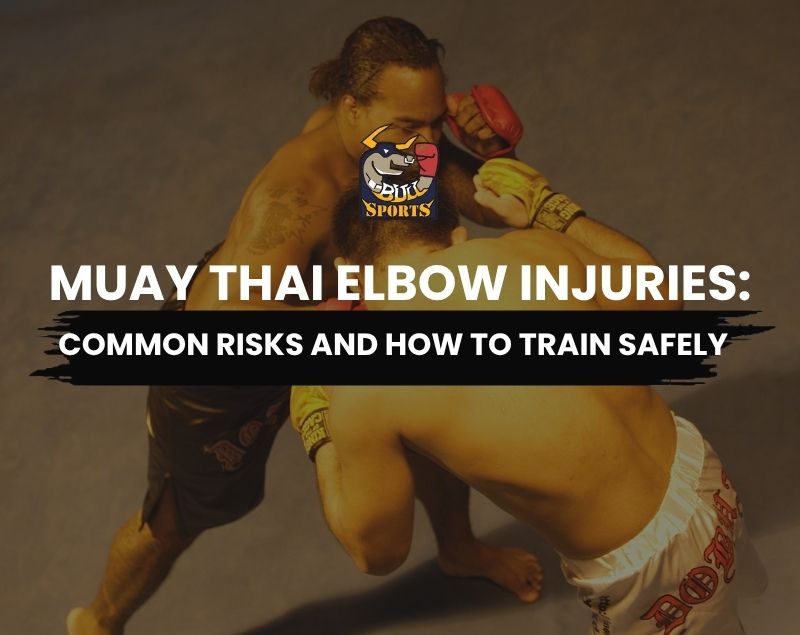
During partner drills and sparring, elbows can come into contact with an opponent, guard, or other body parts. Unexpected impacts can produce bruising or more significant injuries.
Poor Technique
Incorrect elbow positioning can place unnecessary stress on the elbow and surrounding joints, potentially increasing the risk of Muay Thai Elbow Injuries. Beginners should learn elbow strikes under qualified coaching rather than focusing only on generating maximum power.
Common Muay Thai Elbow Risks
The Muay Thai Elbow Risks fighters encounter can vary depending on training style, intensity, experience, and previous injuries.
Possible problems include:
- Bruising and soft-tissue irritation
- Muscle or tendon strains
- Overuse-related discomfort
- Joint pain or swelling
- Sprains or more significant joint injuries following trauma
A broader survey of martial arts participants found that the forearm and elbow accounted for 19% of reported upper-extremity injury locations, while sprains and muscle strains were among the most frequently reported injury types.
Importantly, these figures cover multiple martial arts rather than Muay Thai alone, so they should not be interpreted as a specific injury rate for Muay Thai elbows.
How to Reduce the Risk of Muay Thai Elbow Injuries
Focus on Technique Before Power
A technically correct elbow strike should come before trying to hit harder. Work with a qualified coach to develop proper positioning, rotation, distance, and control.
Increase Training Load Gradually
Avoid suddenly adding large amounts of elbow drilling or high-intensity sparring to your routine. Gradual progression gives your body time to adapt.
Use Appropriate Protective Equipment
Protective equipment cannot eliminate injury risk, but it can play a role in safer training and may help reduce the risk of Muay Thai Elbow Injuries. Research involving Muay Thai fighters found an association between protective-equipment use and lower odds of fight-related injury, although the study could not establish causation.
For controlled partner drills, appropriate protective equipment may include boxing gloves, hand wraps, elbow protection where appropriate, and other gear required by your gym.
Allow Time for Recovery
Training through persistent pain is not the same as productive conditioning. Understanding Muay Thai Elbow Risks is important, while rest days, adequate sleep, nutrition, and sensible training volume all support recovery.
When Should You Stop Training?
- Mild post-training soreness can occur after unfamiliar or demanding exercise, but persistent or worsening pain should not simply be ignored.
- Consider stopping the activity and seeking professional medical assessment if you experience significant swelling, severe pain, loss of movement, instability, numbness, weakness, or an injury that does not improve.
- An elbow injury following a major impact, fall, or suspected dislocation should receive prompt medical attention. Elbow dislocations are significant athletic injuries and may require structured rehabilitation before returning to sport.
Train Hard, But Train Smart
Understanding Muay Thai Elbow Injuries is not about avoiding elbow techniques. Instead, it is about learning how to train them progressively and responsibly.
Good coaching, controlled intensity, appropriate Muay Thai safety equipment, recovery, and attention to pain can all contribute to a safer training environment. The goal is to develop powerful and effective elbow techniques without unnecessarily increasing your injury risk.
At Bull Sports Direct, fighters can explore authentic Muay Thai equipment Bangkok and protective gear from established combat-sports brands, including Muay Thai gloves, hand wraps, elbow protection, and other training essentials.
Whether you’re preparing for your first Muay Thai class or continuing your competitive training, choosing appropriate equipment, such as Nationman Elbow Pads NMEP or Fairtex EBE1 Elastic elbow pads, and developing sound technique can help you train with greater confidence while respecting the physical demands of the sport.